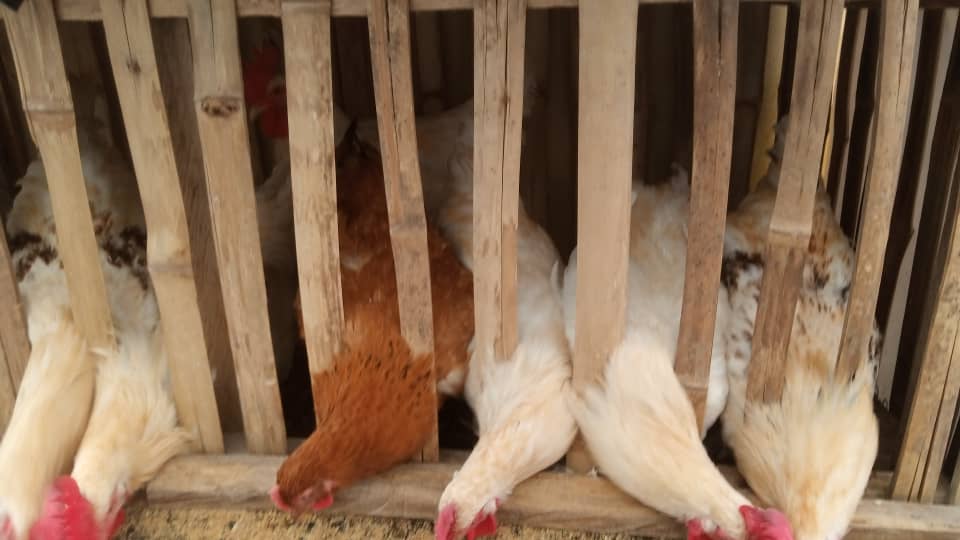
People who know me are usually surprised when they discover I rear chickens in my backyard.
“You do what?”
Yes, I rear chickens. And no, it isn’t a random hobby or something I stumbled into.
It was a deliberate decision for several reasons.
The first was practical.
Chicken has become increasingly expensive, especially during festive periods when demand pushes prices even higher. Instead of constantly paying premium prices, I wanted a more sustainable way to provide quality chicken for my family.
Overall, I get to save some money in the short and long term. I also get to spend some time away from the screen, which really feels cool to me.
The second reason was health.
When you raise your own birds, you have complete control over their environment, what they eat, how they’re fed, and how they’re cared for. That level of control gives me confidence in the quality of the food we consume—something that’s becoming increasingly important.
But those reasons, as important as they were, weren’t the biggest motivation.
My Backyard Is My Classroom
Agriculture is one of the industries I intend to build in over the long term.
Not as a side project but as a serious business.
I’ve seen too many people invest heavily in industries they barely understand, only to spend money learning lessons they could have learned on a much smaller scale.
I didn’t want to make that mistake.
My backyard chickens became my classroom.
If I hope to one day build a commercial poultry operation, I first need to understand the realities that no business plan can teach – feeding schedules, housing requirements, disease prevention, mortality rates, bird behaviour, record keeping, and the daily discipline required to care for living animals.
Starting small allows me to make inexpensive mistakes today instead of expensive ones tomorrow.
What I’ve Learned So Far
One lesson became obvious almost immediately.
Feed is the single biggest expense in poultry farming.
Anyone who can reduce feed costs through better sourcing, efficient management, or locally available alternatives gains a significant advantage. It may not be the most exciting part of poultry farming, but it has one of the biggest impacts on profitability.
I also discovered how fragile young chicks can be.
The first few weeks require constant attention. Temperature, hygiene, clean water, vaccination schedules, and stress management all make the difference between healthy birds and unnecessary losses.
These are lessons that are difficult to appreciate until you’re responsible for the birds yourself.
And then there’s the reward.
The taste of freshly raised chicken and farm-fresh eggs is noticeably different from what you’ll typically buy in a supermarket. Knowing exactly how they were raised makes every meal a little more satisfying.
Looking Beyond My Backyard
For me, these chickens represent something much bigger than today’s meals.
Nigeria faces a growing food security challenge. Population growth, rising production costs, inflation, currency pressures, and years of underinvestment in agriculture continue to make quality food more expensive and less accessible.
At the same time, those challenges create enormous opportunities for people willing to innovate.
I believe agriculture, supported by technology and better business systems, will become one of Nigeria’s most important growth sectors over the next two decades.
I want to contribute to that future, not simply as an observer, but as someone who understands the industry from the ground up.
Every bag of feed I buy, every mistake I make, every lesson I learn in my backyard is an investment in that future.
The poultry farm I hope to build one day won’t begin with hectares of land or thousands of birds.
It began with a small flock in my backyard.